
Best knife for cutting meat: top picks and reviews

Choosing the right knife for cutting meat is crucial for both professional chefs and home cooks. The best knife for cutting meat not only enhances efficiency in the kitchen but also ensures precision in your cuts. In this guide, we will explore various knife options, their features, and key considerations to help you make an informed choice.
Understanding the distinctions between different types of knives is essential. Whether you need a knife for slicing, carving, or butchering, there’s a right tool for every task. Let’s dive into what makes a knife ideal for cutting meat.
Index
- What makes a knife ideal for cutting meat?
- How do I choose the right knife for meat preparation?
- What are the key features of a butcher knife?
- Which knives excel in carving and slicing meat?
- What is the difference between carving and slicing knives?
- How do I maintain my meat-cutting knives for longevity?
- Related questions about meat cutting knives
What makes a knife ideal for cutting meat?
A knife's design plays a significant role in its effectiveness for cutting meat. The best knife for cutting meat should have a sharp blade, ergonomic handle, and appropriate length suited for the task. Sharpness is essential; a dull knife not only makes cutting harder but can also be dangerous.
Moreover, a knife with a well-balanced weight distribution allows for better control and reduces fatigue while working. The blade material matters too; stainless steel blades retain sharpness longer and resist corrosion, ensuring durability.
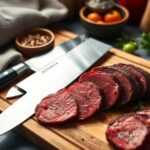 Best knives for meat: top recommendations
- Blade sharpness: Essential for clean cuts.
- Handle comfort: A good grip reduces strain.
- Blade material: High-quality steel for durability.
- Weight distribution: Balanced knives provide better control.
Ultimately, the ideal knife for meat cutting combines these elements to enhance performance and ensure safety.
How do I choose the right knife for meat preparation?
Choosing the right knife for meat preparation requires consideration of the specific tasks you will be performing. A versatile chef's knife can handle many tasks, but sometimes specialized knives are necessary for optimal results.
For instance, if you're primarily slicing cooked meats, a slicing knife with a long, straight blade would be ideal. On the other hand, for butchering tasks, a butcher knife is designed to maneuver around bones and joints efficiently.
Here are some tips for selecting the right knife:
Best knives for meat: top recommendations Roast rabbits: recipes and tips for perfect results
- Identify the primary tasks you need the knife for.
- Consider the blade length that suits your cutting style.
- Look for a knife with a handle that feels comfortable in your hand.
- Invest in high-quality materials for longevity.
Reflecting on these aspects will guide you toward the best knife for cutting meat based on your individual needs.
What are the key features of a butcher knife?
A butcher knife is a specialized tool designed for breaking down large cuts of meat. Its features set it apart from standard knives, making it essential in both commercial and home kitchens.
Key features of a butcher knife include:
- Blade length: Typically longer than average knives, around 8 to 12 inches.
- Thick blade: Provides strength for heavy-duty tasks.
- Wide blade: Allows for better control and leverage.
- Pointed tip: Useful for puncturing and separating meat from bone.
These features make the butcher knife an indispensable tool for anyone serious about meat preparation.
Best knives for meat: top recommendationsRoast rabbits: recipes and tips for perfect results Solar lights for the garden: a complete guide
Which knives excel in carving and slicing meat?
When it comes to carving and slicing meat, having the right knife can significantly affect the outcome of your presentation. Two prominent options are carving knives and slicing knives.
The Wüsthof Classic Carving Knife is highly recommended for its precision and pointed tip, making it ideal for navigating around bones. In contrast, the Victorinox Fibrox Pro is celebrated as the best slicing knife, known for its ability to deliver thin, even cuts of tender meat.
Both knives feature ergonomic handles, ensuring comfort during long periods of use. For those who prefer versatile solutions, professional meat cutting knives often combine features from both types, allowing for flexibility in the kitchen.
What is the difference between carving and slicing knives?
While carving and slicing knives may appear similar, they have distinct purposes and design elements that cater to specific tasks.
Best knives for meat: top recommendationsRoast rabbits: recipes and tips for perfect resultsSolar lights for the garden: a complete guide Grilled rabbit recipes for every occasion
Carving knives usually have shorter, wider blades that are designed for maneuvering around bones and carving roasts. Their design allows for greater control and precision when serving portions.
Slicing knives, on the other hand, are characterized by their long, straight blades, which are optimal for cutting through tender meat with a smooth, consistent motion. This feature is essential for achieving uniform slices, especially in dishes like roast beef or ham.
In summary, the key difference lies in their design and intended use. Selecting the right knife based on these attributes will enhance your meat preparation experience.
How do I maintain my meat-cutting knives for longevity?
Proper maintenance is vital for ensuring the longevity and performance of your meat-cutting knives. Regular care not only keeps them sharp but also prevents corrosion and damage.
Best knives for meat: top recommendationsRoast rabbits: recipes and tips for perfect resultsSolar lights for the garden: a complete guideGrilled rabbit recipes for every occasion Solar garden lamps for your outdoor space
Here are some essential maintenance tips:
- Regular sharpening: Use a whetstone or honing rod to maintain the edge.
- Proper cleaning: Hand wash your knives and avoid the dishwasher to prevent damage.
- Storage: Store knives in a block or magnetic strip to protect the blades.
- Inspection: Regularly check for any signs of wear or damage and address them promptly.
By following these maintenance tips, you can ensure that your knives remain in top condition and continue to perform well with every use.
What is the best knife to cut meat with?
The best knife to cut meat is subjective, as it depends on the specific tasks involved. However, generally, a high-quality butcher knife or chef's knife would be ideal for a range of meat preparations. A knife like the Wüsthof Classic or Victorinox Fibrox Pro can excel in tasks like carving and slicing, making them popular choices among chefs and home cooks alike.
What is the best knife shape for butchering?
The best knife shape for butchering is typically a curved blade. This design allows for better maneuverability around bones and joints. A butcher knife with a wide, thick blade provides the strength needed to handle tougher cuts of meat, making the task more efficient. Additionally, the curvature helps in achieving clean cuts while minimizing effort.
Best knives for meat: top recommendationsRoast rabbits: recipes and tips for perfect resultsSolar lights for the garden: a complete guideGrilled rabbit recipes for every occasionSolar garden lamps for your outdoor space Plancha asar eléctrica: la mejor opción para tus comidas
For durability and versatility, consider knives made from high-quality materials. This ensures that the knife not only performs well for butchering but also lasts for years with proper care.
By understanding the key features and maintenance tips for meat-cutting knives, you can select the best knife for cutting meat that suits your culinary needs. Remember, the right knife can significantly impact your meat preparation and Cooking experience.
If you want to know other articles similar to Best knife for cutting meat: top picks and reviews you can visit the category Meat Preparation Techniques.
Core temp pork: safe cooking temperatures explained

Meat chart temp for safe cooking

Lems meat grinder guide
Deja una respuesta

Gestionar consentimiento
Funcional Siempre activo
El almacenamiento o acceso técnico es estrictamente necesario para el propósito legítimo de permitir el uso de un servicio específico explícitamente solicitado por el abonado o usuario, o con el único propósito de llevar a cabo la transmisión de una comunicación a través de una red de comunicaciones electrónicas.
Preferencias
El almacenamiento o acceso técnico es necesario para la finalidad legítima de almacenar preferencias no solicitadas por el abonado o usuario.
Estadísticas
El almacenamiento o acceso técnico que es utilizado exclusivamente con fines estadísticos. El almacenamiento o acceso técnico que se utiliza exclusivamente con fines estadísticos anónimos. Sin un requerimiento, el cumplimiento voluntario por parte de tu proveedor de servicios de Internet, o los registros adicionales de un tercero, la información almacenada o recuperada sólo para este propósito no se puede utilizar para identificarte.
Marketing
El almacenamiento o acceso técnico es necesario para crear perfiles de usuario para enviar publicidad, o para rastrear al usuario en una web o en varias web con fines de marketing similares.
More embers